



 SCHEDULE SERVICE
  CALL 972-346-2332
 Water is one of those things you don’t think about… until something goes wrong. A sudden pressure drop, strange taste, cloudy glass, or wo rse, a leak that shows up out of nowhere. That’s usually when homeowners realize their water system needs attention.
A big part of keeping everything running smoothly comes down to proper water filtration maintenance, something many people overlook until water quality starts to change.
The truth is, keeping your home water system in good shape doesn’t have to be complicated. With a bit of awareness and some regular care, you can avoid most major issues and keep everything running smoothly for years.
Let’s walk through what actually matters, what you can handle yourself, and when it’s smarter to call in help.
What Counts as Your Home Water System?
Before getting into maintenance, it helps to know what you’re dealing with.
Your home water system includes:
- Incoming water supply line
- Pipes running through your home
- Water heater
- Faucets, showers, and fixtures
- Drains and sewer connections
- Water filtration system (if installed)
All of these parts work together every day. If one piece starts to struggle, it often affects the rest.
Why Regular Care Makes a Big Difference
Skipping maintenance might seem harmless at first. After all, the water still flows, right?
But small issues tend to build quietly. A bit of sediment here, a slow leak there, and before you know it, you’re facing expensive repairs.
Keeping your system in check helps you:
- Avoid surprise plumbing emergencies
- Maintain clean, safe water
- Extend the life of appliances like your water heater
- Keep water pressure consistent
- Reduce long-term repair costs
Think of it like car maintenance. You wouldn’t wait for the engine to fail before checking the oil.
Start With Your Water Quality
If your water doesn’t taste right or leaves residue, your system might already be telling you something.
Common signs to watch for:
- Metallic or chlorine taste
- White spots on dishes or fixtures
- Dry skin after showering
- Cloudy or discolored water
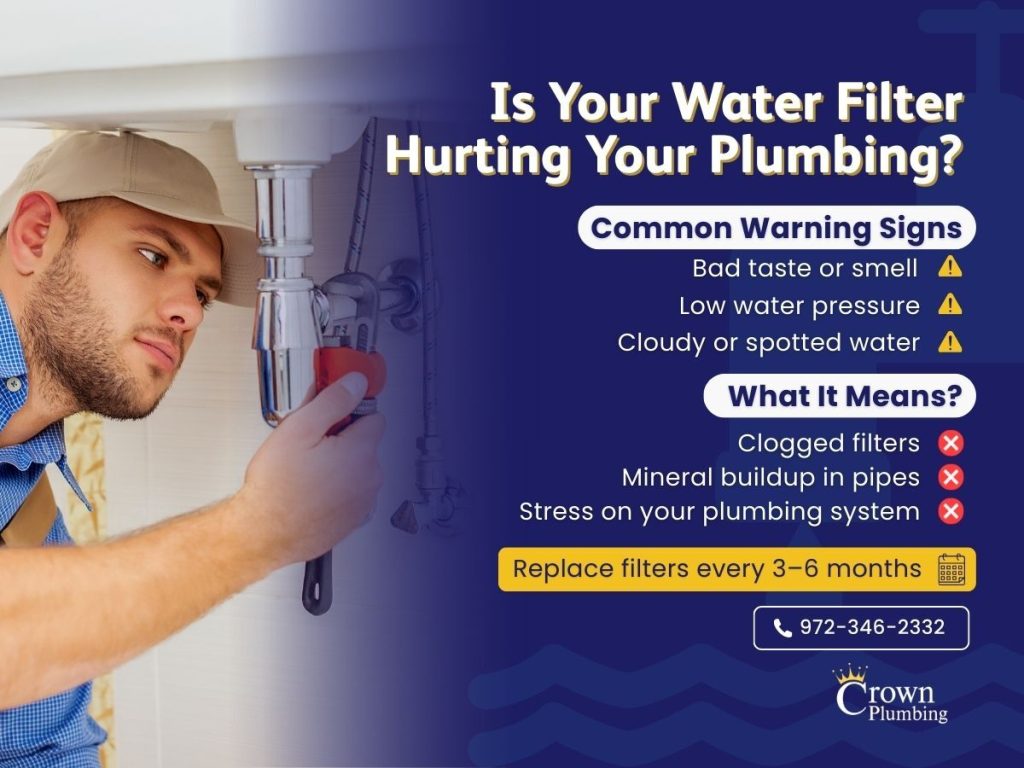
These issues often point to mineral buildup or contaminants. That’s where proper water filtration maintenance becomes important.
Understanding Water Filtration Maintenance
A filtration system helps remove impurities from your water. But here’s the catch: it only works well if you maintain it.
Over time, filters get clogged. When that happens, they don’t just stop working; they can actually make things worse.
What to keep an eye on:
-
Filter lifespan
Most filters need replacing every 3 to 6 months, depending on usage and water quality.
-
Water pressure changes
A sudden drop might mean your filter is clogged.
-
Strange taste or smell returning
That’s usually a sign your filter is past its prime.
Simple maintenance habits:
- Mark your calendar for filter replacements
- Check manufacturer guidelines (they matter more than guesswork)
- Don’t ignore subtle changes in water quality
A neglected filter can affect your entire system, not just your drinking water.
Keep an Eye on Your Pipes (Even If They’re Hidden)
Out of sight doesn’t mean out of mind. Pipes run behind walls and under floors, so it’s easy to forget about them.
Still, they leave clues when something’s off.
Signs your pipes need attention:
- Unusual noises like banging or rattling
- Rust-colored water
- Persistent leaks or damp spots
- Sudden spikes in your water bill
Even a small leak can waste hundreds of gallons over time.
What you can do:
- Check under sinks and around appliances monthly
- Look for moisture, corrosion, or loose connections
- Insulate exposed pipes, especially during colder months
If something feels off, trust that instinct. Plumbing issues rarely fix themselves.
Don’t Ignore Your Water Heater
Your water heater works hard every day. Showers, laundry, dishes- it handles it all.
Without maintenance, sediment builds up inside the tank. That can lead to:
- Reduced heating efficiency
- Strange popping sounds
- Higher energy bills
- Shorter lifespan
Basic care steps:
- Flush the tank once a year
- Check the temperature setting (around 120°F is usually ideal)
- Look for signs of rust or leaks
If your water heater is over 8 to 10 years old, it might be worth getting it inspected.
Water Pressure: Not Too High, Not Too Low
Water pressure should feel just right. Being too weak is annoying. Too strong a pressure can actually damage your pipes.
Ideal pressure range:
Around 40 to 60 psi
Signs of pressure problems:
- Weak flow from faucets
- Banging sounds in pipes
- Leaking fixtures
- Appliances are wearing out faster
A pressure regulator can help keep things balanced if needed.
Drain Care Isn’t Just About Clogs
Clogged drains are obvious. Slow drains are easy to ignore.
But they’re often early warning signs.
What causes buildup:
- Grease and food waste
- Hair and soap residue
- Mineral deposits
Simple habits that help:
- Avoid pouring grease down the sink
- Use drain covers to catch debris
- Flush drains occasionally with hot water
If multiple drains start slowing down at once, that could point to a bigger issue in the main line.
Seasonal Checks That Actually Help
Your plumbing system reacts to weather changes more than you might expect.
During colder months:
- Insulate exposed pipes
- Disconnect outdoor hoses
- Keep indoor temperatures stable
During warmer months:
- Check irrigation systems for leaks
- Inspect outdoor faucets
- Watch for higher water usage
A quick seasonal check can prevent headaches later.
When DIY Isn’t Enough
There’s a fine line between routine care and situations that need expert attention.
Call a plumber if you notice:
- Persistent low water pressure
- Recurring leaks
- Water discoloration that doesn’t go away
- Sudden increase in your water bill
- Signs of a hidden leak (like mold or wall stains)
Trying to fix complex issues without the right tools can make things worse.
Smart Upgrades That Make Life Easier
If you’re planning to improve your system, a few upgrades can go a long way.
Consider:
- Whole-house filtration systems
- Tankless water heaters
- Leak detection devices
- Water softeners
These aren’t just convenience upgrades. They can help protect your plumbing and improve daily comfort.
The Role of Local Plumbing Services
Every area has its own water conditions. Hard water, mineral content, and infrastructure all play a part.
That’s why working with a local plumbing service can make a difference. They understand the common issues in your area and can spot problems faster.
If you’re in Texas, for example, mineral-heavy water is fairly common, which makes regular water filtration maintenance even more relevant.
A trusted service like Crown Plumbing Service can help with inspections, repairs, and long-term care without overcomplicating things.
Building a Simple Maintenance Routine
You don’t need a complicated checklist. Just a few consistent habits can keep your system in good shape.
Monthly:
- Check for visible leaks
- Monitor water pressure
- Look under sinks and around appliances
Every 3 to 6 months:
- Replace water filters
- Clean faucet aerators
Yearly:
- Flush your water heater
- Schedule a plumbing inspection
- Check for hidden leaks
Consistency matters more than perfection.
A Few Things People Often Overlook
Even careful homeowners miss a few details.
- Ignoring small leaks because they seem harmless
- Waiting too long to replace filters
- Using chemical drain cleaners too often
- Forgetting about outdoor plumbing
These small habits can quietly shorten the life of your system.
Final Thoughts
Taking care of your home water system isn’t about doing everything perfectly. It’s about paying attention and acting early.
A strange noise, a slight change in taste, a slow drain, these are all signals worth noticing.
Handle the simple stuff yourself, stay consistent with maintenance, and don’t hesitate to get help when needed. That balance is what keeps your system reliable.
If you ever feel unsure or want a second opinion, reaching out to a local expert like Crown Plumbing Service can save you time, stress, and unexpected costs down the road.

