



 SCHEDULE SERVICE
  CALL 972-346-2332
 Spring is the best time to catch hidden plumbing leaks because winter pressure changes weaken pipe joints, and warmer weather speeds up small drips into bigger ones. Checking your water meter, looking under sinks, inspecting outdoor spigots, and listening for running water when nothing is on will catch most leaks before they cause real damage. If you spot anything suspicious, schedule a plumbing service through Crown Plumbing Service
Winter does ugly things to the pipes inside your home. Cold snaps, expansion, contraction, all that pressure on joints and fittings that were never built for big swings. Most of the damage is invisible until spring, when the temperature stabilizes, and water starts flowing more freely. That’s exactly when small cracks turn into steady drips, and steady drips turn into ceiling stains, warped floors, and water bills that make you wince. Catching spring plumbing leaks early is one of the smartest things a homeowner in Prosper or anywhere else in North Texas can do, and the window for catching them quietly is short.
Why Winter Wreaks Havoc on Pipes (Even in Texas)
You might think North Texas winters are mild enough to spare your plumbing. They aren’t. Even one or two hard freezes a season can put pipes under stress. Water inside the lines expands as it gets close to freezing. That expansion pushes against joints, fittings, and any weak point in the system. Even if a pipe doesn’t burst, the seal can loosen just enough to start a slow leak.
Then add temperature swings. Pipes contract when it’s cold, expand when it warms up, contract again the next night, expand the next day again. After a few weeks of that, the smallest manufacturing weakness or aging seal becomes a problem. By March or April, those weakened spots start dripping. Some of them do it right out in the open under a sink. Others hide inside walls, under slabs, or behind appliances where you’d never notice for months.
Why Catching Leaks Early Matters So Much
A small leak today is cheap to fix. The same leak six months from now might not be. Here’s what tends to happen when small leaks get ignored:
- The drywall around the leak softens and starts to mold.
- The flooring underneath warps or stains.
- The wood framing in the wall absorbs moisture and weakens.
- Insulation gets soaked, loses its R-value, and stays wet for months.
- Your water bill creeps higher and higher.
- Mold spreads to other parts of the wall cavity.
Eventually, a homeowner notices a stain or smell, and by then, the repair has tripled in cost.
The difference between a $200 fix and a $4,000 repair is often a few weeks of attention. That’s why spring inspections matter.
Where Hidden Leaks Hide in a Typical Home
Leaks rarely show up where you expect them. Here are the spots we check first when we’re called out for a leak hunt:
- Under the kitchen sink. The most common leak points in any home are garbage disposals, faucet supply lines, and the P-trap, all of which live in a tight cabinet that hides drips for weeks. Pull everything out of the cabinet, run the faucet, and run the disposal. Shine a flashlight on every joint.
- Around toilet bases. A leaking wax ring is silent and slow. The first sign is usually a soft floor or a faint smell near the toilet. Look for discoloration on the tile or grout around the base.
- Behind the washing machine. Washing machine hoses are one of the biggest causes of catastrophic home flooding in the country. They develop tiny pinholes long before they burst. Check the hoses for cracks, soft spots, or rust around the connections.
- Water heater tank and connections. Water heaters fail without warning. Check the floor around the tank for rust stains or wet spots. Look at the inlet and outlet pipes for corrosion.
- Outdoor hose bibs. Spring is when outdoor faucets get used again after months of sitting. Frost-damaged hose bibs often leak inside the wall. Turn the spigot on while someone listens or feels along the wall behind it.
- Sprinkler systems. Underground irrigation lines crack constantly in the North Texas soil. A wet patch in the yard that doesn’t dry out is the giveaway.
- Around appliances. Dishwashers, ice makers, and reverse osmosis systems all use small water lines that fail over time.
How to Run a 5-Minute Leak Test on Your Whole House
You don’t need any tools for this. Pick a quiet time when no water is being used in the home.
- Find your water meter. Most homes in Prosper have it near the curb in a small concrete box.
- Lift the lid and look at the dial. Note the exact reading.
- Make sure no one is running water, no toilets are flushing, no dishwasher or laundry is going.
- Wait 15 to 30 minutes.
- Check the meter again.
If the number moved at all during a no-use window, water is leaving your system somewhere. Even a tiny movement matters. That’s a leak. Time to figure out where.
A faster version of the same test uses the leak indicator on the meter itself, usually a small triangle or wheel that spins when water is flowing. If it’s spinning when nothing in the house is on, you leak.
Signs You Probably Have a Hidden Leak Right Now
Some leaks announce themselves loudly. Most don’t. Here’s what to watch for around the house this spring:
- Your water bill jumped without any change in habits
- You hear running water in the walls when nothing is on
- A specific spot on the ceiling has a faint yellow or brown ring
- Your floor feels soft or springy in one area
- A musty smell in a bathroom or laundry room
- Hot water that runs cool faster than it used to
- The grass over a buried water line is greener than the rest of the yard
- Cracking or peeling paint on a wall for no clear reason
Any one of those is enough reason to investigate. Two of them together means you should probably call someone.
Why DIY Leak Hunting Has Limits
You can find some leaks with a flashlight and patience, but hidden slab leaks need specialized tools. Acoustic detectors, thermal imaging, and pressure testing help pinpoint issues under foundations without unnecessary digging, making accurate slab leak repair faster and more cost-effective.
If your meter is moving and you can’t find the source after a careful search, that’s the moment to call a pro. A trained tech can pinpoint a slab leak or an in-wall leak in under an hour. That’s a much better outcome than ripping out drywall, hoping you guessed right.
What Spring Maintenance Catches That Other Seasons Miss
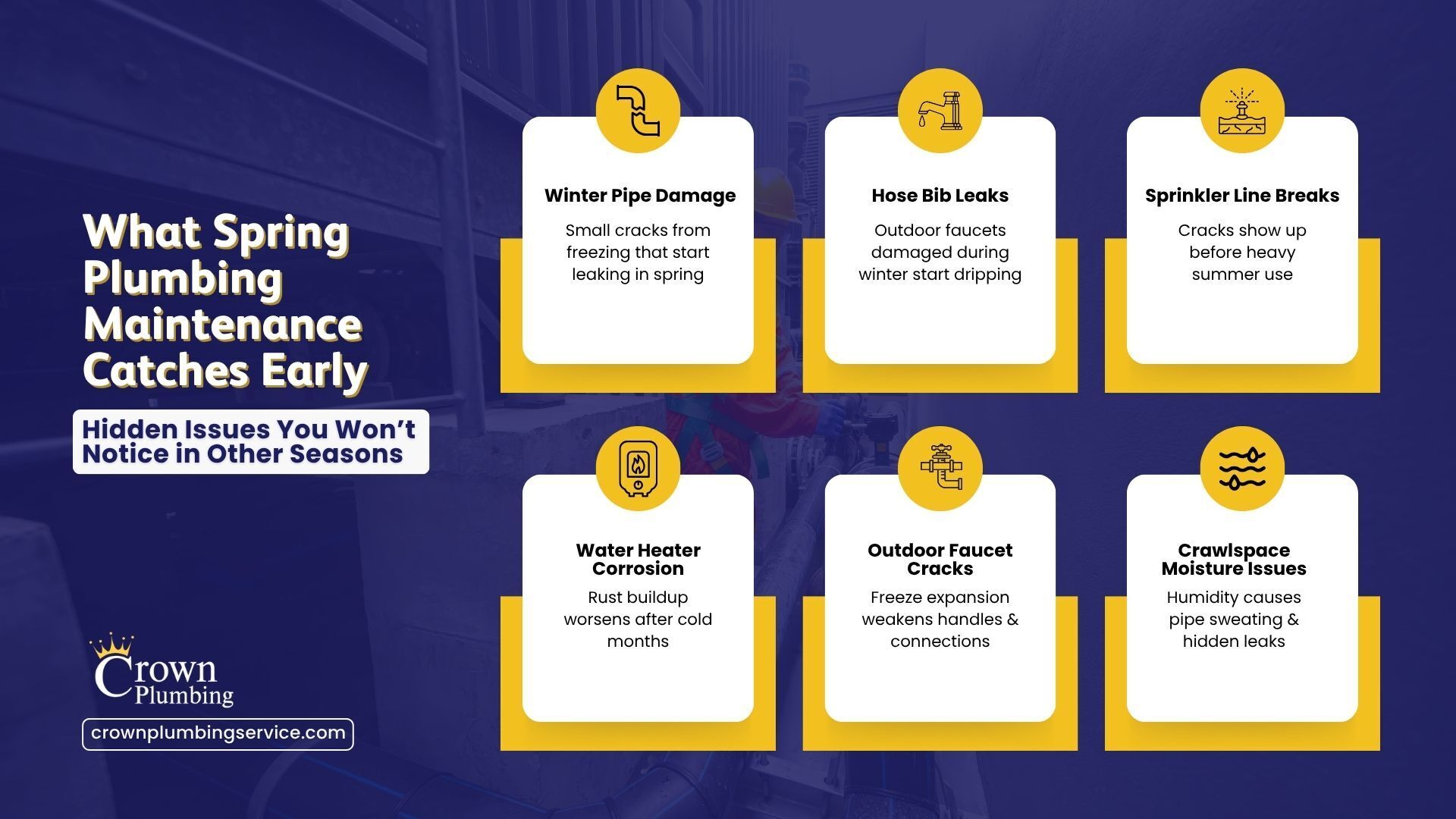
Spring inspections catch a few specific things you won’t find in summer or fall:
- Frozen-pipe damage from winter that hasn’t fully revealed itself yet
- The hose bib leaks before you start watering the yard heavily
- Sprinkler line breaks before the system gets serious daily use
- Water heater corrosion that worsened in cold months
- Outdoor faucet handle cracks from freeze expansion
- Crawlspace pipe sweating caused by humidity changes
A spring inspection takes maybe 90 minutes for a typical home. The amount of damage it prevents over the rest of the year is usually massive in comparison.
Why Prosper Homes Have Specific Issues
Prosper is growing fast, and most homes are newer construction with builder-grade fittings. Newer doesn’t mean problem-free. We see a lot of failed PEX connections, loose dishwasher supply lines, and undersized water heater drains in homes that are only 5 to 10 years old.
The clay soil in this part of North Texas also shifts with the seasons, which puts pressure on slab pipes and outdoor lines. None of that means Prosper homes are bad. It means they need attention from someone who knows what to look for around here.
A Simple Spring Plumbing Checklist
If you do nothing else, do these eight things:
- Run the meter test described above.
- Check under every sink with a flashlight.
- Inspect the base of every toilet.
- Look behind the washing machine and replace hoses older than 5 years.
- Check the water heater for rust or wet spots.
- Test every outdoor spigot.
- Run the sprinkler system one zone at a time and walk the yard.
- Schedule a professional inspection if anything looks off.
That whole routine takes about an hour. It’s the cheapest insurance you can buy for your plumbing.
Wrapping Up
Spring plumbing leaks have a way of starting small and growing fast. The good news is they almost always give you warning signs before they turn into real damage. A meter test, a flashlight, and a careful walk through the house catch most problems before they hit your wallet hard. Pay attention now, and you’ll head into summer with a system you can trust.
When you’d rather have someone else do the looking, we’re happy to help. At Crown Plumbing Service, we walk through every common leak point in the house, run the right tests, and give you straight answers on what needs attention. No fluff, no upsell. Give us a call when you’re ready, and we’ll take care of it.

