



 SCHEDULE SERVICE
  CALL 972-346-2332
 Clean drinking water is something most homeowners expect without thinking much about it. Turn on the tap and water flows. For many homes, a filtration system works quietly behind the scenes to keep that water clear, safe, and pleasant to drink.
But like any system connected to plumbing, filtration equipment can run into trouble. Filters clog, pressure changes, and parts wear out over time. Sometimes the issue is small and easy to fix. Other times, it may signal a larger problem inside the unit or even within the home’s plumbing lines.
So how can a homeowner tell when a system just needs a Water Filtration repair and when something more serious might be going on?
Let’s walk through the most common water filtration problems, what causes them, and when repair is usually the smartest move.
Why Water Filtration Systems Run Into Problems
Water filtration systems deal with minerals, sediment, chlorine, and other substances every day. That constant exposure naturally leads to wear.
Even well-built systems need occasional attention. A few everyday factors can lead to problems:
- Heavy sediment in municipal or well water
- Filters that stay in place longer than recommended
- Pressure changes in the plumbing system
- Aging components such as valves and housings
- Mineral buildup inside the unit
Many homeowners assume their system will simply run forever without attention. That rarely happens. Like a water heater or garbage disposal, filtration systems benefit from periodic checks and maintenance.
When issues appear early, repairs are usually straightforward.
Slower Water Flow From Taps
One of the first signs that something is wrong is reduced water flow.
You turn on the kitchen faucet expecting the usual pressure, but the stream feels weak. Maybe the filtered water tap drips instead of flowing steadily.
Most of the time, a clogged filter is the cause.
Filtration cartridges trap sediment, rust, sand, and other particles. Over time, those materials build up inside the filter. Eventually, water struggles to pass through.
Common causes include:
- Filters that haven’t been replaced on schedule
- High sediment levels in the local water
- A filter type that is too fine for the household’s water supply
Replacing the cartridge often solves the problem. If pressure stays low after replacement, a technician may check internal valves or plumbing lines for blockage.
Strange Taste or Odor in Drinking Water
Water filtration systems exist mainly to improve water quality. So when water suddenly tastes odd, something isn’t working as it should.
Homeowners sometimes describe the taste as:
- Metallic
- Chlorine-like
- Musty
- Slightly bitter
A worn filter is usually responsible. Once a filter reaches the end of its lifespan, it stops removing unwanted materials from the water.
Another possibility is bacterial growth inside the system, especially if it sits unused for long periods.
Repair may involve:
- Replacing filters
- Cleaning the housing
- Flushing the system
- Replacing certain internal parts
If the system is still in good shape overall, repair is usually far more practical than replacement.
Cloudy or Discolored Water
Filtered water should look clear. When water appears cloudy, yellowish, or slightly brown, it catches attention quickly.
Several issues may cause this change:
Sediment buildup inside filters can release particles into the water. A cracked filter cartridge may also allow debris to pass through the system.
Sometimes the problem begins outside the filtration unit. Work on municipal water lines, pipe corrosion, or disturbance inside plumbing pipes can send sediment toward the filter.
A technician usually checks the following:
- Filter condition
- Housing seals
- Internal screens
- Water supply pressure
If the filtration unit itself is still structurally sound, replacing a few components often restores normal water clarity.
Water Leaks Around the Filtration Unit
Any plumbing system can develop leaks. Water filtration systems are no exception.
Leaks often appear around:
- Filter housings
- Connection fittings
- Shutoff valves
- Tubing lines
In many cases, the problem is a worn O-ring. These rubber seals keep water from escaping around threaded connections. Over time, they dry out, flatten, or crack.
A simple seal replacement may stop the leak completely.
Other times, the housing itself might be cracked. That can happen if filters are tightened too much or if pressure spikes occur inside the plumbing system.
When the housing remains intact, repair tends to be quick and affordable.
Frequent Filter Clogging
Some homes go through filters faster than expected. A cartridge rated for six months may clog in just a few weeks.
This often points to heavy sediment in the water supply.
Well water systems commonly face this issue, though city water can carry sediment after pipe work or seasonal changes.
Possible solutions include:
- Installing a pre-filter to catch larger particles
- Adjusting the filtration setup
- Cleaning sediment traps
Instead of replacing the entire filtration system, a targeted repair or upgrade can improve performance and extend filter life.
Odd Noises From the Filtration System
Filtration units usually operate silently. When sounds appear, something may be wrong.
Homeowners sometimes hear:
- Whistling
- Humming
- Vibrations inside the housing
- Clicking during water use
These noises may come from pressure imbalance, air trapped in the system, or loose internal components.
Air pockets sometimes enter after filter replacement. A system flush may remove them.
Other noises could indicate a failing pressure valve or a worn part inside the unit.
When addressed early, repair tends to solve the issue without replacing the entire system.
Water Pressure Fluctuations
Some homeowners notice filtered water pressure changing throughout the day. At one moment, the flow feels strong, and then it drops suddenly.
Several factors might cause this pattern.
A partially clogged filter can restrict water flow during heavy usage periods. Pressure regulators within the system may also wear out after years of operation.
If pressure swings are mild, replacing filters may solve the issue.
When pressure continues to fluctuate, a professional inspection can determine whether internal components require repair.
When Repair Makes More Sense Than Replacement
Many homeowners assume a malfunctioning filtration system must be replaced. That is not always true.
In fact, repair often makes the most sense when:
- The system is less than 8 to 10 years old
- The housing and structure remain intact
- Problems involve replaceable parts
- Water quality was good before the issue appeared
Common repair tasks include:
- Filter replacement
- Valve repair
- Seal replacement
- Tubing repairs
- Minor pressure adjustments
These repairs usually cost far less than installing a new filtration unit.
Situations Where Replacement Might Be Better
While repairs solve many problems, certain conditions suggest replacement may be the better path.
For example:
Older filtration units may struggle to keep up with modern water demands. Parts might also become difficult to find.
Replacement may be considered when:
- The housing is cracked beyond repair
- The system is very old
- Repairs happen repeatedly within a short period
- Water demand in the home has increased
An evaluation helps determine whether continued repairs are practical.
Preventing Future Filtration Problems
Many filtration issues are avoidable with simple care.
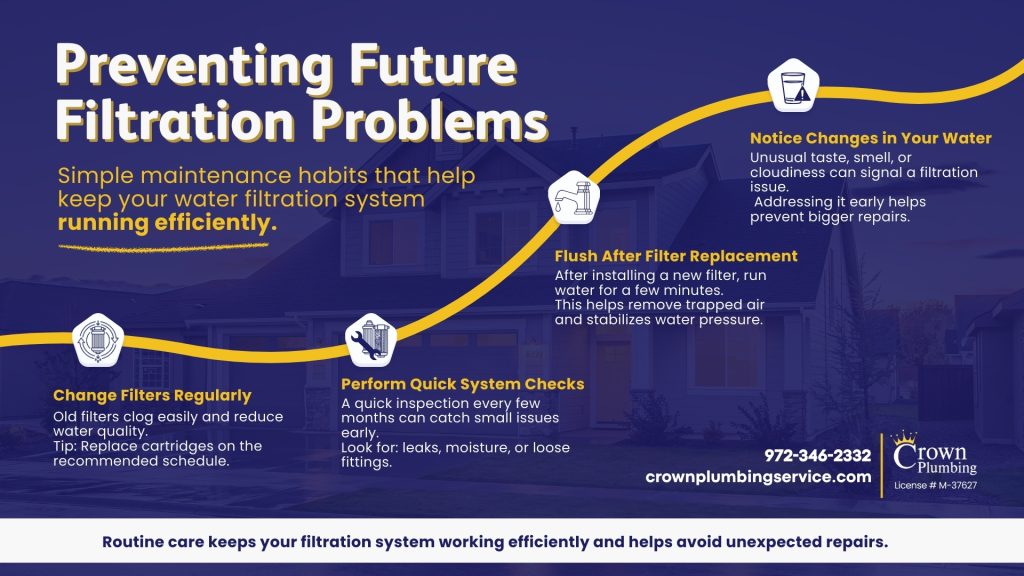
Homeowners can reduce trouble by following a few habits.
Replace Filters on Schedule
Filter cartridges work best when changed regularly. Waiting too long leads to clogged filters and poor water quality.
Check the System Periodically
Take a quick look at the filtration unit every few months. Check for moisture, loose fittings, or unusual sounds.
Flush the System After Filter Changes
Air trapped in the lines can affect pressure and performance. Running water for a few minutes after installing a new filter usually clears it.
Pay Attention to Water Changes
Taste, smell, and clarity often give early warning signs. When something feels off, addressing it quickly can prevent larger repairs later.
Why Professional Inspection Helps
Filtration systems may look simple on the outside, yet they connect directly with a home’s plumbing system. Diagnosing problems sometimes requires checking pressure levels, valves, and water quality.
A trained technician can identify issues that homeowners might miss.
Professional service may involve:
- Testing water pressure
- Checking internal valves
- Inspecting filter housings
- Looking for sediment buildup inside pipes
This type of inspection helps determine whether repair will solve the problem or whether another approach is needed.
A Quick Word on Local Water Conditions
Water quality varies from one region to another. Mineral levels, sediment content, and chlorine treatment all affect how filtration systems perform.
Homes in areas with hard water may see faster mineral buildup. Locations with older municipal pipes may experience occasional sediment spikes.
These factors influence how often filters need replacement and what type of filtration system works best.
Because of this variation, local plumbing professionals often have a clearer picture of what systems perform well in the area.
Conclusion
Water filtration systems quietly protect the quality of drinking water every day. When something goes wrong, the signs often appear through slower water flow, strange taste, cloudy water, or small leaks around the unit.
The good news is that many of these problems have straightforward fixes. Replacing filters, repairing seals, or adjusting pressure components can bring a system back to normal without replacing the entire unit.
Paying attention to early warning signs can make a big difference. Addressing small problems early usually keeps repair costs manageable and helps extend the life of the system.
When homeowners in North Texas need help diagnosing filtration issues, professional plumbers such as Crown Plumbing Service can inspect the system and determine the most practical repair approach. A quick inspection today may prevent larger plumbing concerns later.

