



 SCHEDULE SERVICE
  CALL 972-346-2332
 TL;DR
Drains slow down after winter because grease, hair, soap residue, and food scraps build up faster when people spend more time indoors cooking and showering. Cold pipes also make grease harden inside the lines, narrowing the flow. By spring, those layers reach the point where water visibly drains more slowly throughout the house.
You barely notice it at first. The kitchen sink takes a few extra seconds to clear. The bathtub holds water around your ankles longer than it used to. The bathroom sink gurgles when you brush your teeth. Then one morning, the dishwasher backs up into the sink, and you realize it’s been getting worse for weeks. Slow drains after winter are one of the most common spring plumbing problems homeowners run into, and they rarely fix themselves. The reason is simple: winter habits and weather changes leave drains in worse shape than they were in the fall, and most of that buildup needs more than a bottle of drain cleaner to clear.
We get a wave of calls about this every March and April. People assume one big clog is the issue. Usually, it’s a slow accumulation of several small problems that finally catch up with the pipes. The good news is that once you know what’s actually causing it, the fix is straightforward. For more serious issues, like leaks under your concrete slab, professional slab leak repair ensures your home stays safe, and your plumbing runs smoothly.
Why Winter Is So Hard on Your Drains
Winter changes how a household uses water. People cook more at home, take longer showers, run more loads of laundry, and spend more time inside in general. All of that means more food, hair, lint, soap, and grease going down the drains every day. Add the cold weather effect on the pipes themselves, and you have a recipe for buildup.
Cold pipes are the part most homeowners miss. Grease that goes down the sink as a warm liquid hits the colder section of the pipe and hardens almost immediately. Layer after layer builds up on the inside of the line, narrowing it from a smooth circle to something that looks more like a clogged artery on a medical poster. By the time you notice slow water, that buildup might be three or four months thick.
The same thing happens in shower drains with hair and soap scum, in bathroom sinks with toothpaste and shaving residue, and in tub drains with all of the above plus bath products.
The Most Common Causes of Slow Drains in Spring
Different drains slow down for different reasons. Here’s what we usually find when we run a camera or auger down each one:
- Kitchen sinks: Hardened grease, food particles, coffee grounds, and the bottom of every sauce that ever got rinsed off a plate. Garbage disposals create a false sense of safety. They grind food, but the small particles still go down the drain, where they catch on the rough inside walls and create a sticky base for more buildup.
- Bathroom sinks: Toothpaste, hair from shaving, soap residue, and the gunk that collects around the pop-up stopper. Pull the stopper sometimes and look at it. You’ll understand fast.
- Showers and tubs: Hair is the biggest culprit by far. Long hair, especially. It tangles around the strainer or the first bend in the pipe and traps soap, dead skin, and whatever else comes down. Over months, it forms a dense mat that water has to fight through.
- Toilets: Toilets don’t usually slow down from buildup the way sinks do, but they can develop slow flushes from mineral deposits, cracks in the flapper, or partial clogs deeper in the line. If a toilet flushes weakly and the bowl drains slowly, the issue is often in the trap or the main line.
- Laundry drains: Lint, fabric softener residue, and the grime from clothes all build up in the standpipe over time. A laundry drain that bubbles or backs up is usually telling you it’s almost full.
Why a Drain in One Room Affects Other Rooms
Sometimes the slow drain isn’t really about that drain. It’s about the main line further downstream. If multiple fixtures slow down at the same time, or if water from one drain backs up into another, the problem is in the main sewer line, not the individual pipe under your sink
Tree roots are a big factor here. Roots find tiny cracks in the main line, work their way in, and grow inside the pipe. They catch toilet paper and food waste, creating a dam that water has to push through. North Texas has a lot of mature trees, especially in older neighborhoods, and root intrusion is one of the top causes of mainline issues we see every spring.
Another mainline cause is sagging pipe sections. Soil shifts over time, especially in clay-heavy areas, and a section of pipe can sink slightly, creating a low spot where waste collects instead of flowing through. Cameras catch these easily.
Why Store-Bought Drain Cleaners Aren’t a Real Fix
Walk down any hardware store aisle, and you’ll see rows of liquid drain cleaners promising fast results. We don’t recommend them, and here’s why.
- They use harsh chemicals that can damage pipes, especially older PVC and metal lines.
- They rarely fix the root cause. They burn through a small channel in the buildup and let water trickle past, which fools you into thinking the clog is gone.
- The remaining buildup grows back fast, often within weeks.
- The chemicals can splash back during use and cause burns.
- If a plumber later has to clear the same line, the chemicals are dangerous to work around.
- They’re expensive when you add up multiple bottles a year.
A proper drain cleaning using mechanical tools or hydro jetting actually clears the line all the way back to the wall of the pipe. The difference shows up immediately and lasts much longer.
How to Check What Kind of Slow Drain You’re Dealing With
You can do a little detective work before calling anyone. Run through this short checklist:
- Is only one drain slow, or are several slow at once?
- Does any drain make a gurgling sound when another drain is used?
- Does the toilet bubble when the washing machine drains?
- Is there a foul smell coming from any drain?
- Have you used drain cleaner already, and it didn’t fix it?
- Has anything backed up into a different fixture?
If only one drain is slow, you’re probably dealing with localized buildup that can be cleared at the trap or with a simple snake. If multiple fixtures are involved, or if you’re getting gurgling and bubbling, the main line needs attention.
What Actually Clears a Drain Properly
The right tool depends on what’s clogging the line. Here are the main options pros use:
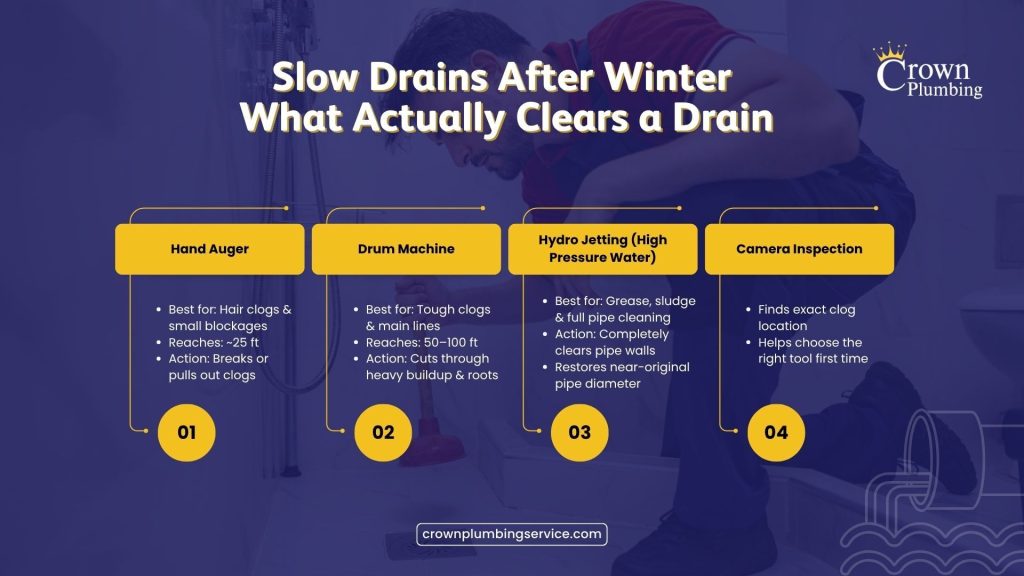
- Hand augers (snakes): Good for hair clogs and small obstructions in shower or sink drains. They reach 25 feet or so and physically grab or break up the clog.
- Drum machines: Bigger snakes are used for tougher clogs and main lines. They can reach 50 to 100 feet and handle root intrusions and packed buildup.
- Hydro jetting: A high-pressure water system that blasts the inside of the pipe clean. It’s the most effective for grease, sludge, and long-term buildup. It restores the pipe to nearly its original diameter.
- Camera inspection: Not a clearing tool, but worth mentioning. A camera lets a plumber see exactly what’s in the pipe and where, so the right tool gets used the first time.
- For most spring drain issues we see in homes around Prosper, hydro jetting is the gold standard. It actually removes the buildup instead of just punching a hole through it.
Easy Habits That Keep Drains Flowing
Most drain problems are preventable. Build these habits, and you’ll cut your spring slow-drain calls in half:
- Never pour grease down the kitchen sink. Pour it into a can or jar and toss it in the trash.
- Use mesh strainers on every shower and tub drain to catch hair.
- Run hot water for 30 seconds after every use of the kitchen sink to keep oils moving through the line.
- Pull pop-up stoppers monthly and clean them.
- Don’t put coffee grounds, eggshells, rice, or pasta down the disposal.
- Run the dishwasher on a hot cycle at least once a week.
- Flush each drain monthly with a kettle of hot water and a tablespoon of dish soap.
- Schedule a professional drain cleaning every 12 to 18 months for older homes.
Those habits sound minor. They make a huge difference in real drain life.
When to Call a Plumber in Prosper, TX
Some signs mean you should stop trying DIY fixes and bring in someone with the right tools:
- Multiple drains are slow at the same time
- Sewage smell from any drain
- Water is backing up into another fixture
- Toilet bubbling when the laundry runs
- A drain that you’ve snaked yourself with no result
- Recurring clogs in the same spot
Those are all signs of a deeper issue that won’t fix itself. The longer you wait, the bigger the eventual job.
Wrapping Up
Slow drains after winter are annoying, but they’re also a clear signal that your plumbing needs a little attention before bigger issues show up. A few small habits prevent most problems. A good professional cleaning fixes the rest. Either way, the worst thing you can do is ignore them and hope it gets better on its own. It won’t.
When you’re ready to get it sorted properly, we’ll come out, take a look, and clear whatever’s slowing things down with the right tool for the job. At Crown Plumbing Service, we don’t push services you don’t need, and we’ll always tell you straight what’s actually going on inside your drains. Give us a call when the time feels right.

